Eden Long · 14 October 2026
How Microclimates Influence Rare Plant Species Distribution Across Cape Dune Ridges
Microclimates shape plant distribution across Cape Dune Ridges through localized differences in temperature, humidity, wind exposure, and soil moisture that create distinct habitats within short distances. Researchers have documented these variations using sensor arrays placed at multiple elevations and orientations along the ridges, revealing patterns that align closely with the presence or absence of certain rare species. Data collected through 2025 shows that south-facing slopes often maintain soil temperatures 3 to 5 degrees Celsius warmer than north-facing ones during peak summer months, while sheltered depressions trap moisture longer after rainfall events.
Formation of Microclimates Along Ridge Systems
Cape Dune Ridges develop microclimates because their topography interrupts prevailing winds and creates pockets where solar radiation hits at different angles throughout the day. Sand composition and vegetation cover further modify heat retention and evaporation rates, producing gradients that change over distances as small as ten meters. Studies from coastal monitoring programs indicate that these factors combine to produce measurable differences in vapor pressure deficit, which in turn affects seed germination success for species with narrow tolerance ranges. Observers note that ridges oriented perpendicular to dominant wind directions experience the sharpest contrasts between exposed crests and leeward bases.
Temperature and Moisture Dynamics
Temperature fluctuations within the dune system follow daily and seasonal cycles modulated by slope aspect and proximity to the water table. Lower elevations near the base of ridges benefit from cooler air drainage at night, whereas upper slopes receive more direct sunlight and dry out faster. Soil moisture probes installed across multiple sites demonstrate that these microclimatic pockets retain water at depths of 20 to 40 centimeters for extended periods, supporting plants that cannot survive on the drier ridge tops. Evidence from long-term records shows precipitation effectiveness varies significantly depending on whether rain falls during cooler evening hours or during midday heat.
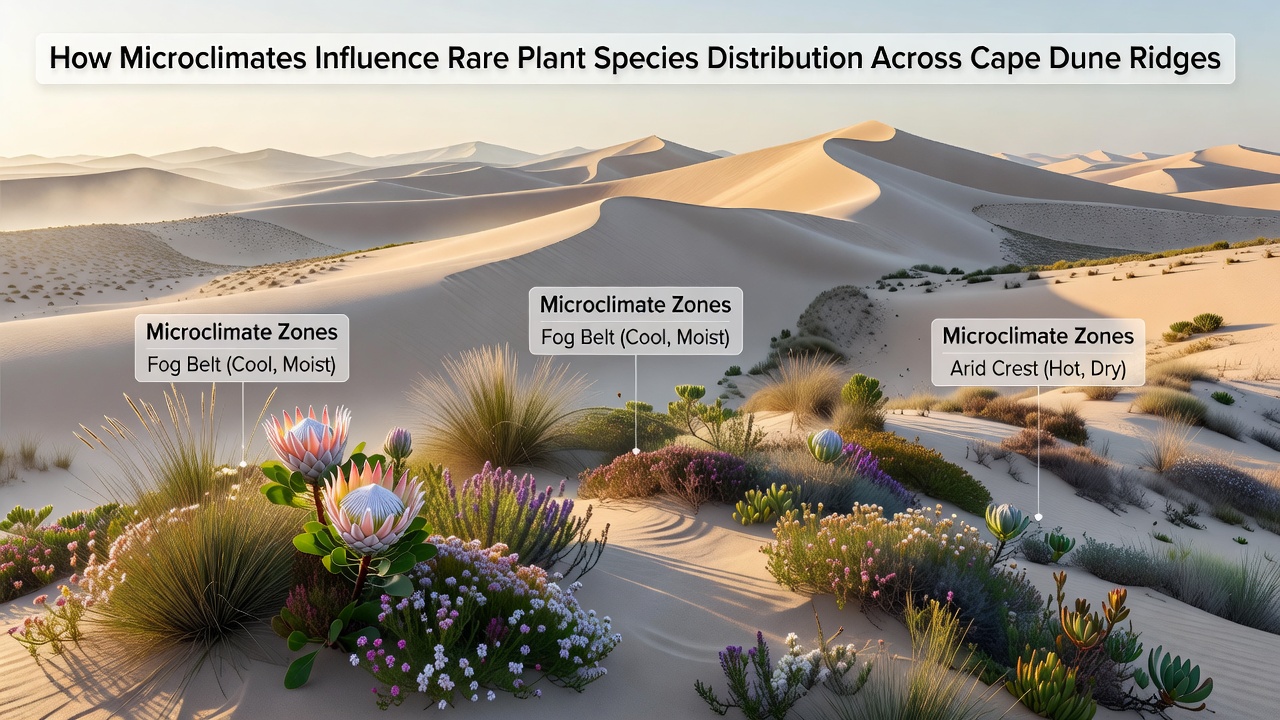
Plant species respond to these gradients by occupying specific niches that match their physiological requirements. Rare endemics often cluster in areas where afternoon shade or fog interception maintains higher humidity levels. Field surveys conducted in recent years have mapped populations of several threatened taxa directly onto zones identified as cooler or moister through microclimate modeling. Those who've studied this know that even small shifts in these conditions can alter competitive balances between native specialists and more widespread colonizers.
Wind Exposure and Its Role
Wind speed and direction add another layer of complexity by influencing transpiration rates and sand movement. Crests and windward faces experience higher velocities that strip away fine particles and desiccate surfaces, while protected hollows accumulate organic matter and maintain calmer conditions. Data from anemometer networks deployed across the ridges reveal that average wind reductions of 40 percent or more occur within 50 meters of certain topographic features. This shelter allows establishment of species sensitive to mechanical stress or excessive drying. According to reports from the U.S. Geological Survey coastal studies, similar wind-driven patterns appear in dune systems worldwide and correlate with distinct vegetation communities.
Distribution Patterns of Rare Species
Distribution mapping efforts show that several rare plant species occur almost exclusively within microclimatic refugia that buffer against regional climate extremes. These include certain orchids and succulents that require consistent moisture during critical growth phases yet cannot tolerate waterlogging. Researchers have tracked seedling survival across different ridge positions and found higher establishment rates in zones where nighttime humidity remains elevated. October 2026 monitoring updates from regional environmental agencies are expected to provide additional confirmation of these associations through expanded sensor coverage. One study revealed that changes in microclimate extent following storm events directly affected the size and connectivity of suitable habitat patches for these plants.
Conservation and Monitoring Approaches
Management strategies now incorporate microclimate data when prioritizing protection zones and restoration sites. Agencies use high-resolution topographic models combined with climate sensors to identify areas most likely to support target species under varying weather scenarios. Australian Government environment reports highlight comparable approaches applied in coastal dune reserves where microclimate mapping guides fencing and weed control efforts. Continued collection of microclimate parameters helps track whether existing populations remain viable as broader climate trends unfold.
Conclusion
Microclimates determine where rare plants can persist across Cape Dune Ridges by creating a mosaic of conditions that larger-scale climate averages do not capture. Ongoing sensor networks and vegetation surveys continue to refine understanding of these relationships, supporting more precise habitat management. The patterns documented so far underscore the importance of preserving topographic diversity that generates these localized environments.