Sam Coleman · 11 November 2026
Decoding the Chemical Signatures Left by Past Volcanic Events in Cape Dune Compositions
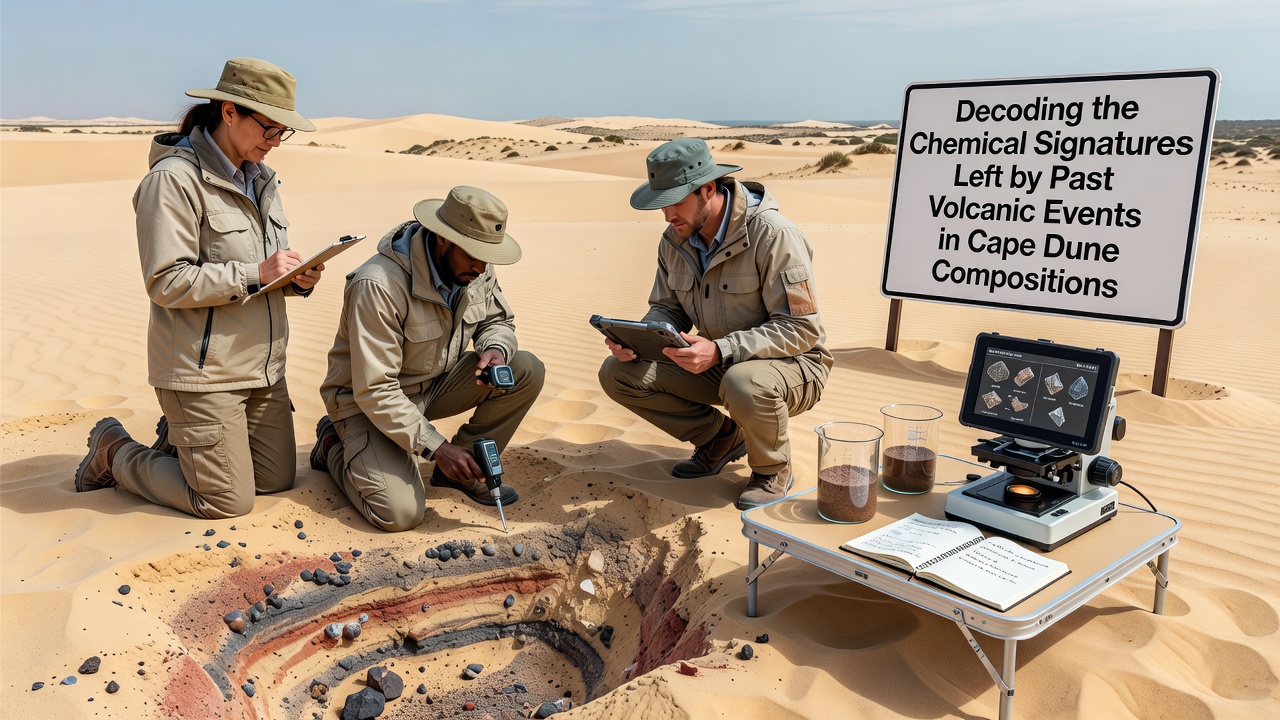
Volcanic eruptions deposit fine ash and tephra across wide regions, and these materials often become incorporated into dune systems along coastal peninsulas where prevailing winds redistribute the particles into layered sand formations. Researchers identify these deposits through distinct chemical fingerprints that include elevated levels of elements such as titanium, zirconium, and certain rare earth oxides which differ markedly from the surrounding quartz-rich dune matrix. Data from sediment cores collected at multiple Cape sites show that these signatures persist for centuries because the glass shards resist weathering and remain chemically stable within the dune structure.
Analytical Techniques Used to Identify Volcanic Markers
Scientists apply a range of laboratory methods to isolate and quantify volcanic components within dune samples, beginning with X-ray fluorescence spectrometry that provides bulk elemental compositions and progressing to more precise tools such as inductively coupled plasma mass spectrometry for trace element detection. Electron microprobe analysis further allows individual glass shards to be examined for major oxide ratios, while laser ablation techniques reveal stratigraphic variations at millimeter-scale resolution. Studies indicate that these combined approaches distinguish primary volcanic inputs from secondary weathering products and local sediment sources with high accuracy.
One research team working on Cape dune transects demonstrated that potassium and sodium ratios in shard populations matched known eruption chemistries from distant volcanic centers, confirming long-distance transport via atmospheric pathways. Such correlations rely on reference databases maintained by geological agencies that catalog tephra compositions from historical events, enabling precise source attribution even when the original eruption occurred thousands of kilometers away.
Documented Volcanic Events Recorded in Dune Stratigraphy
Stratigraphic records from several Cape peninsula locations preserve evidence of at least three major volcanic episodes dating between the late Holocene and the early 1800s, each marked by discrete chemical horizons within otherwise uniform aeolian sand sequences. The oldest layer contains rhyolitic glass with high silica content consistent with caldera-forming eruptions in the Pacific Ring of Fire, whereas a mid-level horizon shows andesitic signatures linked to arc volcanoes in the southern hemisphere. More recent deposits exhibit basaltic compositions that align with documented activity at mid-ocean ridge systems.
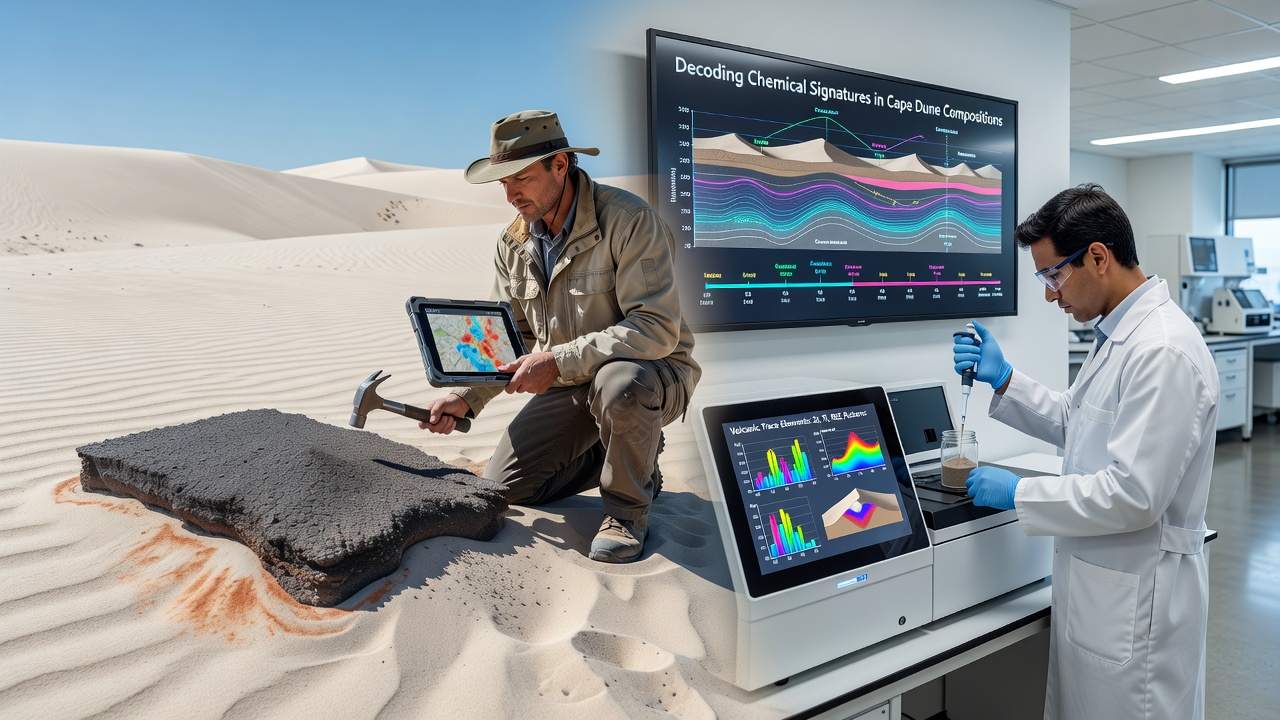
Geoscience Australia maintains extensive tephra reference collections that researchers cross-reference when analyzing southern Cape samples, and the United States Geological Survey supplies comparable datasets for northern hemisphere comparisons. These resources allow investigators to trace particle trajectories through wind pattern reconstructions and to estimate minimum ages using associated radiocarbon dates from intercalated organic materials. The resulting timelines reveal that volcanic inputs can temporarily alter dune accretion rates by increasing sediment supply and changing surface cohesion properties.
Implications for Reconstructing Regional Environmental History
Chemical mapping of volcanic signatures provides independent chronological markers that complement traditional dating methods and refine models of dune migration under varying wind regimes. Observers note that intervals containing multiple ash layers often coincide with periods of heightened storm frequency, suggesting that volcanic aerosols may influence atmospheric circulation patterns that in turn affect sediment transport along peninsula shores. Quantitative data from integrated geochemical and grain-size analyses show measurable shifts in dune composition that persist long after the initial deposition event.
Continued sampling campaigns scheduled through late 2025 will expand the spatial coverage of these chemical datasets, while new portable XRF instruments allow field teams to screen potential horizons rapidly before laboratory confirmation. The resulting information supports broader efforts to understand how episodic volcanic inputs interact with ongoing coastal processes to shape modern dune landscapes.
Conclusion
Analysis of chemical signatures in Cape dune compositions offers a reliable method for identifying and dating past volcanic events that contributed material to coastal sediment systems. Through systematic application of spectrometry and microanalysis, researchers reconstruct transport pathways and temporal sequences that enhance understanding of regional geological history. Ongoing refinement of reference databases and field techniques will further improve the resolution of these reconstructions across additional peninsula environments.